Disclosure: As an Amazon Associate I earn from qualifying purchases. This post contains affiliate links.
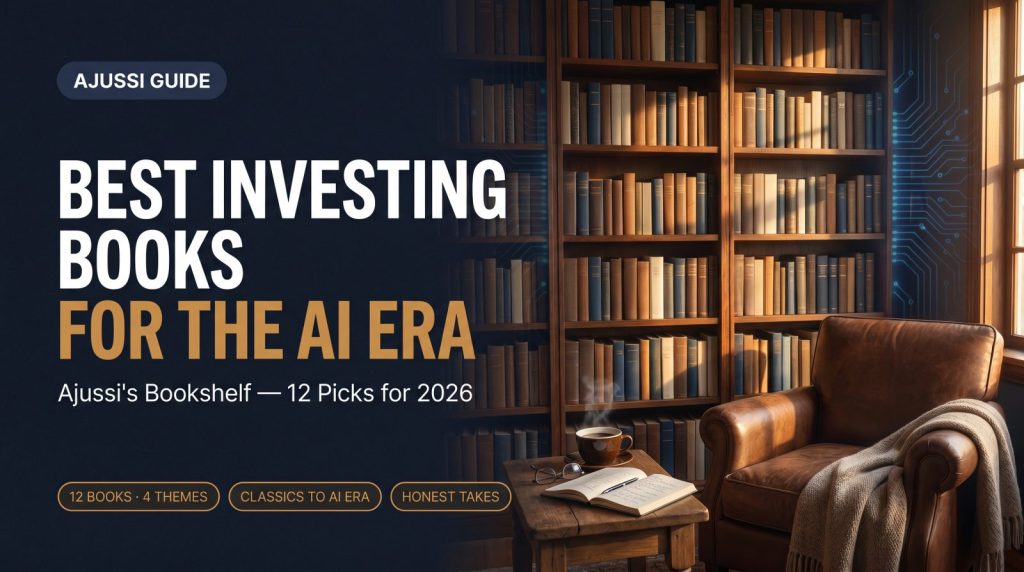
People keep asking me which best investing books actually deserve a spot on the shelf — not the hype-of-the-month titles, but the ones you reread every few years and get something new each time. So here is my honest bookshelf: twelve books, four themes, zero filler. I picked them the same way I pick stocks for this blog — long track record, loved by real readers, and still relevant in a market that AI is reshaping in real time.
How I Picked the Best Investing Books for This List
Three rules. First, every book here has stood up to thousands of reader reviews over years — no fresh bestsellers riding a marketing wave (with one deliberate exception in the AI section, and I explain why). Second, the list has to cover the full journey: understanding markets, understanding the AI infrastructure era we write about daily on this blog, building long-term wealth, and managing your own psychology. Third, I only include books I would hand to my own nephew. If you are brand new to markets, the free educational resources at Investor.gov pair well with any of these titles.
Investing Classics — Start Here
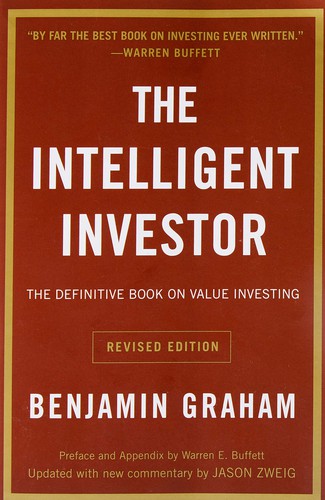
The Intelligent Investor
Benjamin Graham (rev. ed. with Jason Zweig commentary) · 1949 / 2006
The book Warren Buffett calls the best investing book ever written. Mr. Market, margin of safety, the difference between investing and speculating — every framework that keeps you sane in a volatile market starts here. The revised edition adds modern commentary after each chapter, which makes the 1949 text surprisingly readable today.
Ajussi’s take: Slow reading, lifetime payoff. If you only ever buy one book from this list, it’s this one.
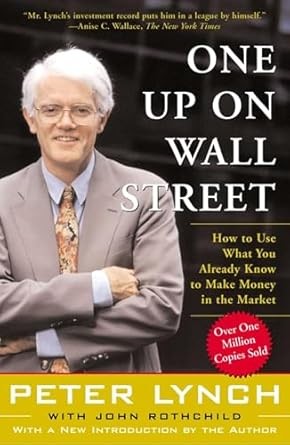
One Up On Wall Street
Peter Lynch · 1989 / 2000
Lynch ran Fidelity’s Magellan Fund with legendary returns, and his core message is liberating: regular investors can beat Wall Street by paying attention to what they already know. His categories of stocks — stalwarts, fast growers, cyclicals, turnarounds — are still the cleanest mental model for classifying any company you research.
Ajussi’s take: Reads like a conversation, not a textbook. The “tenbagger” chapter alone is worth the price.
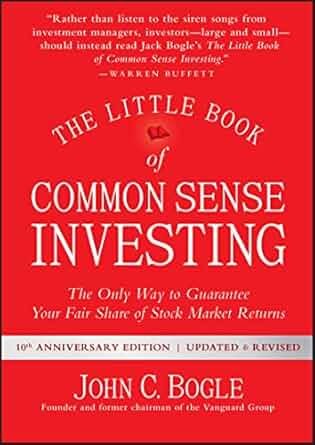
The Little Book of Common Sense Investing
John C. Bogle · 2007 / 2017 updated
The founder of Vanguard makes the mathematical case that costs decide long-term returns, and that a low-cost index fund beats most professionals over time. Short, blunt, and backed by decades of data.
Ajussi’s take: The antidote to every shiny object in finance. Read it before you buy any fund, ever.
The AI & Semiconductor Era — Know What You Own
If you read our AI and semiconductor stock analyses, these three explain the world behind those tickers. No list of the best investing books in 2026 feels complete without the AI story.
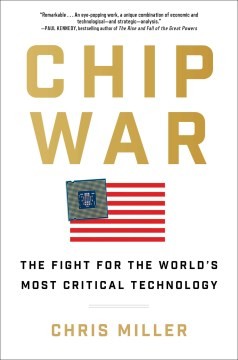
Chip War
Chris Miller · 2022
The definitive history of why semiconductors became the world’s most critical technology — and why the U.S., China, Taiwan, and Korea are locked in a struggle over them. After this book, every headline about export controls, TSMC, or HBM memory reads completely differently.
Ajussi’s take: Required background for anyone holding AI or chip stocks. I reference it constantly when writing this blog.
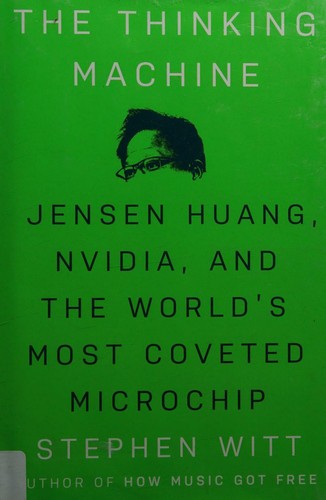
The Thinking Machine
Stephen Witt · 2025
This is my one recent-release exception, and it earns it: the inside story of Jensen Huang and Nvidia’s thirty-year path from near-bankruptcy to the center of the AI economy. It doubles as a history of why data centers, GPUs, and the power-and-cooling buildout we cover here exist at all.
Ajussi’s take: Read it alongside our data center infrastructure analyses — the origin story of the whole trade.
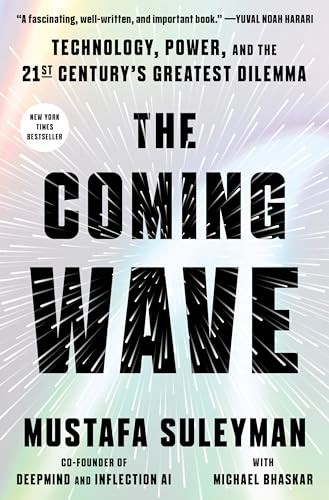
The Coming Wave
Mustafa Suleyman · 2023
The DeepMind co-founder on how AI and synthetic biology will proliferate faster than institutions can contain them. Not an investing book on the surface — but it frames the regulatory and societal risks that will eventually price into every AI-era portfolio.
Ajussi’s take: The risk chapter your bullish AI thesis needs. Uncomfortable and useful.
Long-Term Wealth & Retirement — The Boring Magic
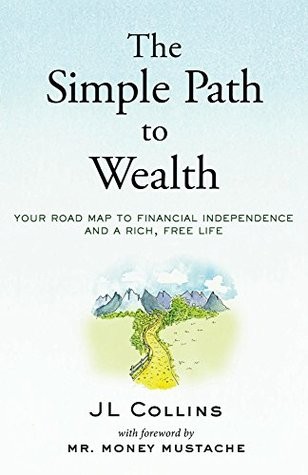
The Simple Path to Wealth
JL Collins · 2016
Started as letters to the author’s daughter, and it shows — plain language, zero jargon, one coherent plan: spend less than you earn, invest the difference in broad index funds, avoid debt, let time work. The FIRE movement’s favorite book for a reason.
Ajussi’s take: The book I recommend to anyone who says “I don’t know where to start.”
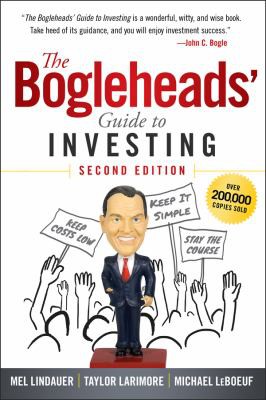
The Bogleheads’ Guide to Investing
Taylor Larimore, Mel Lindauer & Michael LeBoeuf · updated ed.
The practical companion to Bogle’s philosophy, written by the community that lives it: asset allocation, tax-advantaged accounts, rebalancing, insurance, estate basics. Less philosophy, more checklist.
Ajussi’s take: The “how exactly do I do this” manual. Keep it next to the desk, not on the shelf.
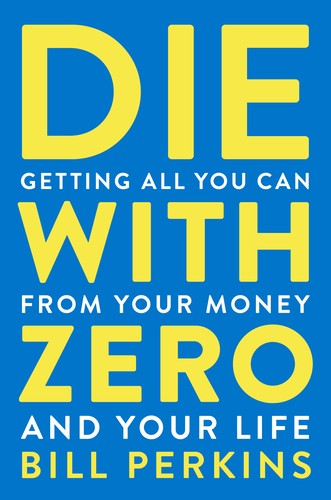
Die With Zero
Bill Perkins · 2020
The counterweight to endless accumulation: money is a tool for life experiences, and the optimal plan spends it deliberately while you can enjoy it. Provocative for savers, clarifying for over-savers.
Ajussi’s take: Changed how I think about the retirement number itself — not just how to reach it, but what it’s for.
Mindset & Trading Psychology — The Hardest Part
Setup matters less than the person at the desk (though if you’re building one, here’s our trading monitor guide). These three are about the person.
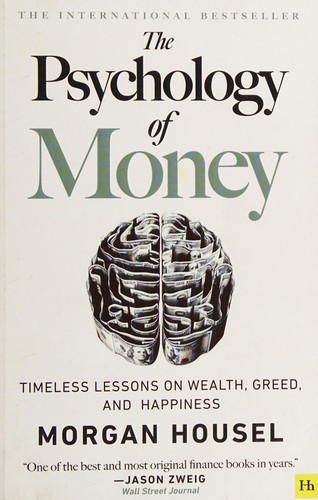
The Psychology of Money
Morgan Housel · 2020
Twenty short essays on how people actually behave with money — luck, greed, envy, compounding, and the difference between being rich and staying wealthy. The rare finance book your non-investor friends will also finish.
Ajussi’s take: The best return-per-page on this list. I reread it every January.
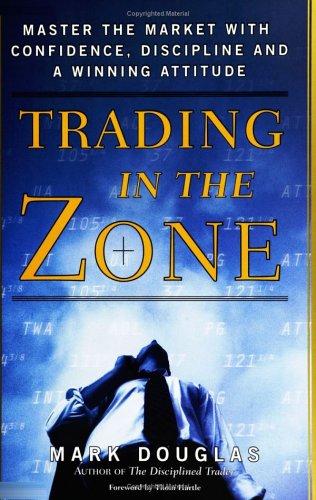
Trading in the Zone
Mark Douglas · 2000
The classic on why most traders lose even with good systems: they never learn to think in probabilities. Douglas rebuilds your relationship with uncertainty, one uncomfortable chapter at a time.
Ajussi’s take: If you’ve ever revenge-traded after a loss, this book is about you. It was about me too.
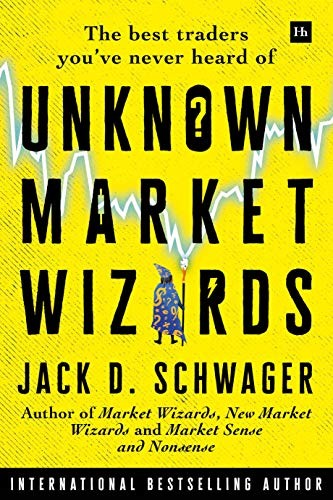
Unknown Market Wizards
Jack D. Schwager · 2020
Schwager’s famous interview series, refreshed with solo traders operating from home with ordinary accounts — and extraordinary discipline. More relatable than the hedge-fund legends of the earlier volumes, same brutal honesty about drawdowns and process.
Ajussi’s take: Proof that edge comes from process and temperament, not a Bloomberg terminal.
Suggested Reading Order
If you’re starting from zero: The Psychology of Money → The Simple Path to Wealth → The Little Book of Common Sense Investing. That trio builds the foundation. Then go where your curiosity points — Chip War and The Thinking Machine if you follow our AI infrastructure coverage, The Intelligent Investor when you’re ready to go deep, and the psychology titles when the market first humbles you. It will. That, to me, is what separates the best investing books from merely good ones — they keep paying interest on every reread.
For more resources beyond books, our investor bookmark hub collects the sites and tools I actually use every day.
FAQ
Q: Are these books beginner-friendly?
Most are. The Psychology of Money, The Simple Path to Wealth, and One Up On Wall Street require zero background. The Intelligent Investor and Trading in the Zone reward some experience — they land harder after you’ve made a few real mistakes.
Q: Why include books that aren’t strictly about investing?
Because the AI era changed what an investor needs to understand. Chip War, The Thinking Machine, and The Coming Wave explain the industry, the company, and the risks behind the biggest capital cycle of our time. Owning AI-era stocks without that context is trading blind.
Q: Kindle, paperback, or audiobook?
Whatever you’ll actually finish. My personal pattern: audiobooks for narrative titles like Chip War, paper for reference titles like the Bogleheads’ Guide that you’ll flip back through for years.
🎓 Age 18–24? Read (and ship) for less
Prime for Young Adults gives students and young adults fast free shipping, Prime Video, and member deals at a discounted rate — starting with a free trial. If you qualify, it can pay for itself on a single order.
Check your eligibility on Amazon →Disclosure: As an Amazon Associate I earn from qualifying purchases. Prices and availability are those listed on Amazon at the time of your visit. This article reflects personal opinions and is not financial advice — book recommendations are for educational purposes.